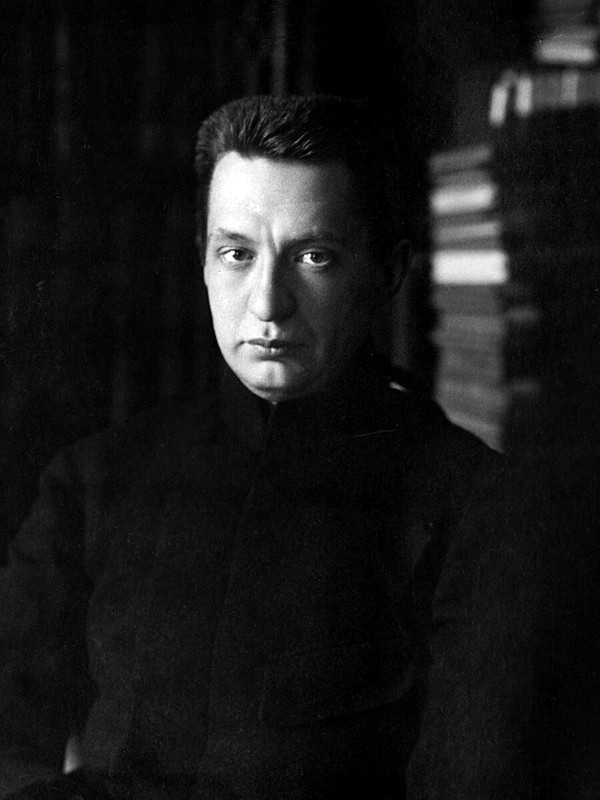

The post-October Russian Provisional Government's last Prime Minister; the figure on whom both Allied and German policy hinged in summer-autumn 1917. Per Pavel Miljukov's 1955 memoirs and Kerensky's 1966 memoirs, Kerensky was a member of the Grand Orient of the Peoples of Russia (the post-1910 Russian political Freemasonry that broke from its French parent, abolished rituals, admitted women, and operated as the political spine of the February Revolution). Per E. Kuskova's testimony 1955: "At the time of the February Revolution all of Russia was covered with a network of lodges." Kerensky was member of nine lodges across Russian, French, and English Masonry plus the post-1918 Russian émigré Supreme Council in Paris. (Claim WiU-22-015.)
and Lenin and to bring about the collapse of a government which had continued to support its 'allies' on the battlefield under unbelievably difficult circumstances." Confronted Albert Thomas in autumn 1918 about the Allied secret partition memo of December 23, 1917; Lloyd George had evaded Kerensky's questions when confronted in summer 1918. Kerensky lived to age 89, mostly in exile in Stanford California where he taught Russian history; died June 11, 1970. (Claims WiU-22-015, WiU-22-018.)LudendorffThe Allied policy condition — Elihu Root's "No war, no loan" of June 1917 — made Kerensky's Provisional Government structurally fail-prone: Russia required Allied credits to function; the Allies required Russia to continue the war; the Russian population was war-weary beyond the breaking point. Kerensky's later (1966 memoir) view: "It was almost as though someone in London and Paris were at work behind the scenes to advance the cause of