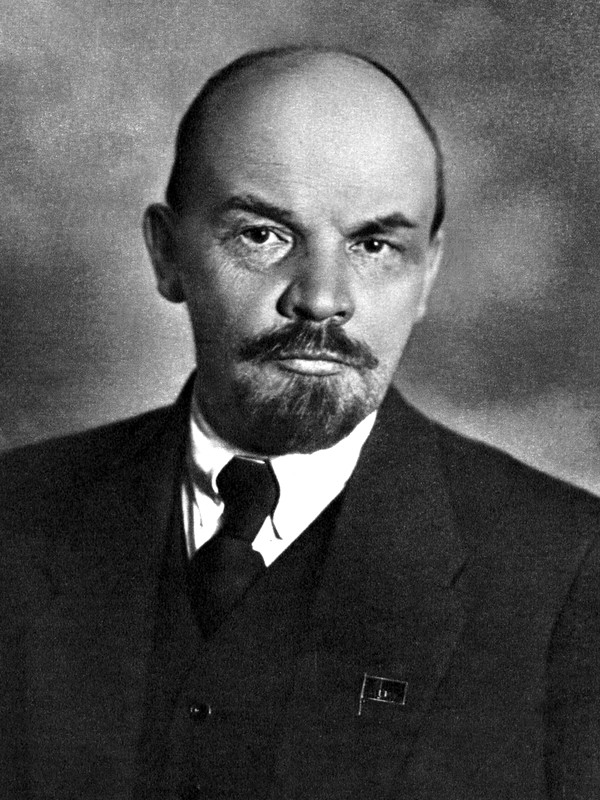
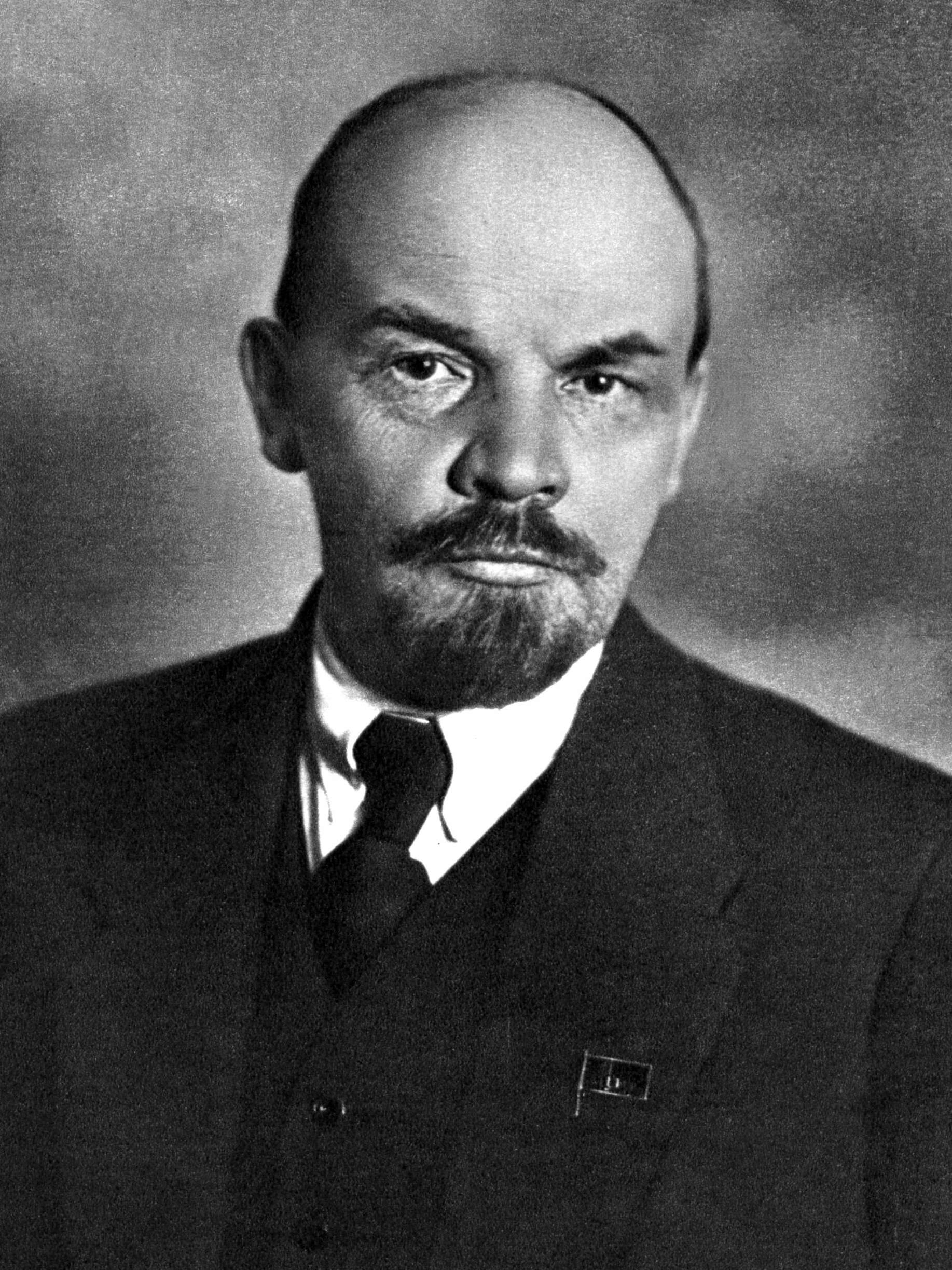
Russian revolutionary, leader of the Bolshevik faction of the Russian Social Democratic Labour Party from 1903; chairman of Sovnarkom 1917-1924. For the cross-corpus reading, the relevant Lenin biography is the Swiss exile period. Lenin was in Bern from late August 1914, broke (200-250 francs/month), with the Bolshevik Party treasury empty. The Allied powers refused him a transit visa; for the Central Powers he was a citizen of an enemy power. The German Foreign Office began cultivating him within six weeks of the war's start. (Claim WiU-22-023.)
September 7, 1914: German envoy Romberg in Switzerland cables Berlin about a Russian (Estonian merchant Alexander Keskula) approaching the Foreign Office on Lenin's behalf. By September 1915 Keskula transmits Lenin's seven-point program to Romberg: republic; peace negotiations; Germany renounces annexations + indemnity; "does not exclude the separation from Russia of national states"; renunciation of Constantinople + Dardanelles; the Russian army marches into India. The wartime Lenin program was structurally aligned with German FO objectives; he was not a useful idiot but an aligned political actor receiving German operational support for a program both shared.
reading was Western-modernity exported to the Russian periphery — not a deviation from the West but its logical product. Died January 21, 1924. (Claims WiU-22-023, WiU-22-024, WiU-22-025, WiU-22-035.)Steiner's (Frankfurt Bethmann banking family). General Max Hoffman's later reflection: "We neither knew nor foresaw the danger to humanity from the consequences of this journey of the Bolsheviks to Russia." Per Steiner (GA 334 1920-03-19 pp. 153-154): "what is represented today in Russia by Trotsky and Lenin is only the final consequence of what our scholars have taught at the universities as materialism." The Bolshevik regime in Theobald von Bethmann-HollwegThe April 1917 sealed-train transit through Germany was approved at the highest level by Chancellor