Record: record unknown How this text was taken down is not on record here. That is not an assurance of a stenogram.
Mystery Knowledge & Mystery Centres
GA 232 — 21 December 1923, Dornach
12. The Mysteries of the Samothracian Kabiri
During these last weeks I have lectured on many forms of the Mysteries. We have been trying to gain insight more especially into those Mysteries which, in a certain sense, were the last of the great Mysteries connecting man’s inner life directly with Nature, with the spirit of Nature-existence. These were the Mysteries of Hibernia. And on the other hand we have seen how, through insight into Man himself, through insight of an altogether intimate, spiritual kind, individual and personal, the Greek Mysteries penetrated into the inner being of Man. One may indeed say: Just as in external Nature various regions of the Earth bear various kinds of vegetation, so in the course of human development in the different regions of the Earth the most manifold influences upon Man appear from the side of the spiritual world.
If we were now to proceed Eastward—as we shall be doing in the course of the next few days in our study of historical connections—we should find there many other forms of the Mysteries. Today, however, since all our visitors are not yet here, rather than start on something new, I will add to what we have already been considering. Looking back on the evolution of man we may describe it as a threefold development, as it appears with all clarity to the Imaginative consciousness. I say the ‘Imaginative’ consciousness, for by extending the epochs of which I am about to speak further and further into the past, we should of course arrive at a greater number than the threefold; and it would be the same if we were to penetrate farther into the future. Today, however, we will take for our study those middle stages of human evolution which do not appear first to Inspiration, but quite clearly even to Imagination. We will consider these today from a particular standpoint.
As late as the Egyptian epoch mankind was still at the stage when for the European-African as well as for the Asiatic peoples there was for the consciousness of man no such thing as what we call matter. There was no external coarse substance of any kind for human consciousness, much less those abstractions which we now call carbon, hydrogen, sulphur, and so on. There were none of these things; everything in outer Nature was immediately seen as the embodiment of divine-spiritual Beings who manifest themselves throughout the whole of Nature. If today we go into the hills and pick up a stone, we look upon it as a substance like any other. Nothing at all comes into our consciousness such as came into the consciousness of the ancient Egyptian and Oriental.
If we today stand before a man and look, let us say, at his finger, we do not consider what we find there as human finger to be an object just like any other. We regard it as belonging to the human organism as a whole. If we were to look, for example, at the last joint of the index finger, we could not do otherwise than speak of it as a part of a whole organism. Thus it was for the consciousness of the ancient Egyptians; and thus too it was for the consciousness of the ancient Orientals. If they came upon a stone and took it up, it was not for them merely a stone as it would be for us today; it was not ordinary earthly substance at all; it was a part of the divine body which the Earth appeared to them to be. Men of old regard the outer surface of the Earth just as we in our consciousness regard the human skin. Again, we may meet a man, and become conscious that he reminds us of someone else we already know, who is perhaps not now present; and if it afterwards transpires that the person we met is the brother or sister of the other, then we see at once these two are of the same flesh and blood, they belong in a special physical way to one another. When the ancient Greek or Oriental raised his eyes to Mars, Jupiter, Saturn, and then looked at the Earth, he saw in the Earth the divine body of the God of the Earth, but at the same time he saw also in the Earth the sister or brother of the planets—in short, he saw a family likeness to the planets which revolve out there in space around the Earth,—Jupiter, Mars, Saturn.
Thus, in their perception of the Cosmos as a whole, and in their perception of the Earth as part of the Cosmos, there was for these ancient people something of soul and spirit. You must picture to yourselves what an utterly different experience this was from the experience modern man has in his perception. It means something, indeed, to gaze at the divine body of the Earth, and to see in the Earth a member of the great family of the planets of the Universe! The people of old did indeed think of the Universe as God-enfilled. For them not only was the whole Earth filled with the Gods, but the great planetary world-bodies, each single planet—all were God-enfilled. In stone and tree, in river and rock, in cloud and lightning, some spiritual being was revealed. This consciousness was awake in wide circles of people on the Earth, and this consciousness was intensified in the various forms of the Mysteries to be found here and there on the Earth.
To turn now to the Greek nature, at the time when the external political greatness of Greece sank into a kind of chaos and the Macedonian power arose, we find a new current flowing into human knowledge. It is what we came to know last time as Aristotelianism, as that which Alexander the Great in a spiritual connection had made his task. When we look at the culmination of the greatness of Greece on the one hand, and on the other the fall of Greece and the rise of Macedonia, we are faced, first of all, with what external history tells us, which is in reality a mere legend. But we can also see something else. In the subconsciousness of the deeper thinkers we perceive an impulse which came from those Mysteries to which Aristotle was very near—despite the fact that he never spoke of them outwardly. They were those Mysteries which, in the deeper sense, awakened to full life in their hearers the consciousness that the whole world was a theogony, a divine process of being, and that we see the world in an altogether illusory way if we believe anything comes to being in the world other than Gods alone. It is Gods who are manifested in the beings and entities of the world. It is Gods who have experiences in the world, it is Gods who perform deeds. And what we see in clouds, what we hear in thunder, what we behold in lightning, what we see on the Earth in rivers and mountains, in the mineral formations—all are revelations, expressions of the coming-into-being of the destinies of the Gods hidden behind them. And what appears externally as cloud, lightning, thunder, trees or forest, mountains or stream, is nothing else than a revelation everywhere of Gods’ existence—-just as the skin of a man reveals his inner nature of soul. And if everywhere there are Gods, then, as the pupils of the Mysteries were taught in Northern Greece, one must differentiate between the lesser Gods who are in single Nature-beings and Nature-processes, and the greater Gods who manifest as Beings of the Sun, of Mars, of Mercury, and of a fourth who cannot be made externally visible in an image or a form.
Those were the great Gods, the great planetary Gods, who were presented to man in such a way that his gaze was led out into the cosmic expanse, to see with his eyes, to see too with his whole heart, what lives in Sun, Mars, Mercury—yes, and what lives not only out there in one little circle in cosmic space but what lives everywhere in cosmic space. This was what was first of all revealed to man.
And then, after what I may call a majestic impulse had been awakened in the pupil of the Mysteries of Northern Greece, in that his gaze was directed out to the planetary spheres—then this insight was deepened within him in such a way that the eye was, so to speak, taken hold of by the heart, so that he might see with the soul. Then the pupil understood why, on the altar facing him, three symbolically formed vessels had been placed.
Here in Dornach we once introduced a portrayal of these vessels in a Eurythmy performance of Faust. They were presented there exactly as they appeared in the Samothracian Mysteries of Northern Greece. The important fact is that with these vessels in their whole symbolic form there was associated an act of consecration, an act of sacrifice. A kind of incense was put into them and lighted, and as the smoke streamed up, three words (of which we shall speak tomorrow) were uttered with mantric power into this smoke by the Father who was celebrating; and there appeared the forms of the three Kabiri. It happened in the following way. The human breath, as it was exhaled, took shape through the mantric word that was spoken, and communicated its form to the ascending, evaporating substance that had been incorporated in the symbolic jars. When in this way the pupil learned to read in the stream his own breath, to read what the stream of his breath wrote in the smoke, he learned at the same time to read what the mysterious planets said to him from out the wide Universe. For now he knew: as the one Kabir was formed through the mantric word and its power, so in actuality was Mercury; as the second Kabir was formed, so in actuality was Mars; and as the third Kabir was formed, so in actuality was Apollo, the Sun.
When we look at those fashion plate figures—if you will forgive such plain speaking—such as we see only too often in the galleries, of the later Greek plastic art, and which are only so greatly admired because people have no idea of the majesty from which they have declined, when we direct our gaze to those figures of an Apollo, a Mars, a Mercury, we must look at them with the gaze with which Goethe looked, during his Italian journey; for then we may gain some idea of what Greek art really was in the productions that are now lost—lost and destroyed along with so much else in the first centuries of the Christian era, in the frightful devastation which befell those times. If we look penetratingly at those late Greek plastic figures, held to be so great (and rightly on the one hand), as pointing the way, but on the other hand wrongly because they are mere imitative reproductions of the earlier—if we look through them back to that from which they arose, we see how in the older Greek times it was nothing less than the revelations accompanying the sacrificial rites that were reproduced in art—revelations that in those earlier times were even more majestic and grand than later on in the Kabiri Mysteries of Samothrace. We look back into times when the mantric word was uttered into the incense smoke, and the true figures of Apollo, of Mars, and of Mercury appeared.
Those were times when man would not say, in the abstract: In the beginning was the Word, and the Word was with God, and the Word was a God—for then he could say something quite different. He could say: In me the outgoing breath takes shape, and inasmuch as it shapes itself in an ordered way, it shows itself as an image of cosmic creating; for it creates for me, out of the sacrificial smoke, forms which are for me living fines of writing, telling me what the planetary worlds would say to me.
When the pupil of the Kabiri Mysteries at Samothrace approached the gates of the places of Initiation, then through the instruction he had received the feeling came to him: Now I am entering the place that holds for me the magic acts of the celebrating Father. (The Initiate who celebrated in these Mysteries was called the Father.) What did the magic power of this celebrating Father reveal to his pupil? Through what was laid within man by the Gods, through the power of speech, the priest-magician and sage wrote into the sacrificial smoke the writing which expressed the secrets of the Universe.
Thus it was that the pupil, as he approached the gate, said in his heart: I am entering that place within whose shelter dwells a powerful Spirit, within whose shelter dwell the greater Gods, who unveil on Earth the secrets of the Universe through the sacrificial acts of man.—There, my dear friends, words were spoken and a writing written that appealed not only to the intelligence but laid claim to the whole man. In the Samothracian Mysteries there was still present something of a knowledge that is today quite dimmed. Modern man is perfectly able to speak with truth something of what he feels a quartz crystal to be like, he can say what hair feels like, or the human skin, or the fur of an animal, he can say how silk or velvet feels to him. Modern man has the capacity of realising such things through his feeling. In the Samothracian Mysteries something still existed by means of which man could truly say how the Gods let themselves be felt. For the sense of feeling, the sense of touch, was still capable of that of which in ancient times it had always been capable; it was still able to feel the spiritual, to touch the Gods.
And now the wonderful thing is this. We must certainly go back to very ancient times even to speak of how man could say with truth: I know through my finger-tips what the Gods feel like. In the Samothracian Mysteries, however, man had another way of touching the Gods. It was as follows:
When the priest-magician spoke the words into the smoke rising from the incense, when he intoned the words into the exhaled breath, then in the outgoing breath he felt as man otherwise feels when he stretches out the hand to touch; and as one knows that one touches differently with the fingertips in passing them over different substances—in feeling velvet, or cat’s fur, or the human skin,—so did the Samothracian priest-magician perceive with the outgoing breath; he perceived the exhalation which he breathed out towards the incense smoke as an expression of something coming out of himself, he felt it as an organ of touch reaching towards the incense smoke. He felt the smoke, and in the smoke he felt the great Gods, the Kabiri coming to meet him. He felt how the smoke forced itself and how the forms there shaping themselves came into the exhaled breath, so that the exhaled breath felt: here is something spherical, there is angularity, there again something is catching hold of me. The whole divine figure of the Kabir was touched and felt by the breath clothed in the form of the word. With the speech issuing from the heart the Samothracian wise men ‘touched’ the Kabiri, that is, the greater Gods descending to them in the smoke of the incense; it was a living interchange between the word within man and the word without in cosmic space.
When the initiating Father led the pupil to the sacrificial altar, and, step by step, taught him how man can feel with speech, and when the pupil progressed further and achieved for himself this ‘feeling with speech’, he came at last to that stage of inner experience in which he first had clear consciousness of the form of Mercury or Hermes, of Apollo, and of Ares or Mars. It was as if the consciousness were wholly raised up out of the body, as if that which the pupil earlier knew as the content of his head, had gone up above his head, as if the heart were located in a new place, being thrust up out of the breast into the head. Then, in the one who had in this way really gone out beyond himself, there arose a knowledge that inwardly formed itself into the words: Thus do the Kabiri, the greater Gods, will thee! From that time the pupil knew how Mercury lived in his limbs, the Sun in his heart, Mars in his speech.
So you see it was not by any means only natural processes and beings in the outer world that were presented to the pupil in ancient times. What was presented to him was something neither one-sidedly naturalistic, nor one-sidedly moral, but he was given something wherein Morality and Nature flowed into one. That was the secret of the Samothracian world—that to the pupil it was granted to have the consciousness: Nature is Spirit, Spirit is Nature.
To those times which found their last echo in the cult of the Kabiri, is to be traced the insight which brings earthly substances into connection with the Heavens. In olden times, when one saw that red-brown mineral with the coppery sheen, which we call copper, one could not simply say as we say today: ‘That is copper, that is a constituent of the Earth.’ It could not be thought of in this way. For the ancients it was no constituent of the Earth. They said: ‘Wherever copper is manifest, there is manifest a deed of Venus on the Earth. The Earth has only suffered rocks and stones to appear, such as sandstone, or chalk, in order to take up in her lap what the Heavens have planted on to the Earth.’ As little as we now should venture to say of a seed that it had merely grown out of the Earth—-just as little in those times would one have been able to say that copper ore was a constituent of the Earth. One had to say: The Earth that is here with its sandstone, or any other stone, is the ground within which something of a metallic nature has been planted by some planet. The metal is a seed planted in the Earth by a planet. Everything within the Earth was viewed as proceeding from the influence of the Heavens upon the Earth. Today the Earth and its substances are described as you may see it done in any mineralogical or geological work, and as it would never have been in the science of the ancients. In those times when man let his gaze wander over the Earth, looking at a substance meant looking up to Heaven and there in the Heavens beholding the essence and reality of the substance.
Copper, tin, lead, only apparently lie in the Earth; they are seeds planted in the Earth-existence during the time of Old Sun and Old Moon. This was still the teaching of the Kabiri in the Samothracian Mysteries. And this it was ultimately that worked upon Aristotle and Alexander—if only as an atmosphere or mood of knowledge. And then a beginning was made for something quite different.
Man did not, with his insight, come right down at once on to the Earth; he went through an intermediary stage. Even in the echoes of those ancient times, in the Samothracian Mysteries, if men wished to describe the metals of the Earth or other earthly substances such as sulphur or phosphorus, it was in fact the Heavens they were describing, just as one describes a plant when one wants to know the nature of a seed.
If you have a seed of corn before you, you cannot recognise its nature and kind unless you know the plant. What would you do with a seed which looks like this, for example, if you did not know what the aniseed plant looks like? What then, the men of old would have asked, would you make of the copper appearing in the Earth, if you did not know what Venus looks like, in spirit, soul and body, up there in the Heavens?
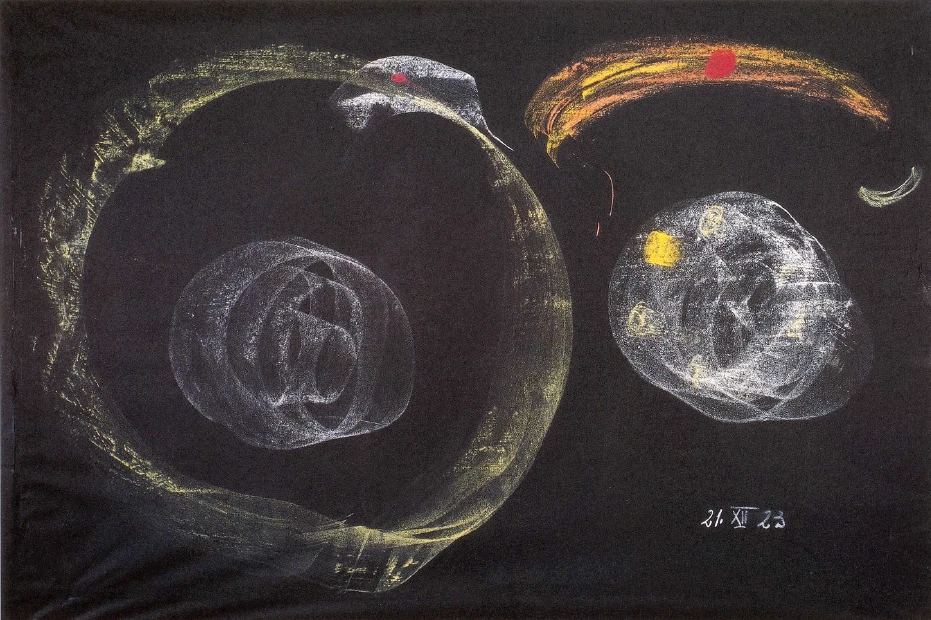
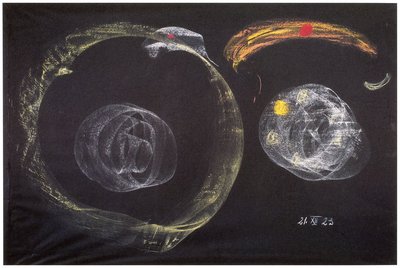
From the knowledge of the Heavens, gradually a knowledge of the environment of the Earth, a knowledge of the atmosphere, was gained. When man regarded what was of the Earth, instead of describing what the stars are, in their essence and nature, he looked to a being of Earth and said to himself; There lives in it first of all what we see in the firm soil; and there lives in it that also which we see as fluid with the tendency to form into drops, and there lives within it too what tends to spread out on all sides, the aeriform, which lives, for example, in human breath and speech. And then there lives in it the fiery element which decomposes the single being so that from the scattered, disintegrated parts a new being may arise. Thus did man behold the elements in every earthly formation.
And as in the ancient Mysteries men looked to the Salt—true, it is also cosmic in nature, but it is formed and moulded by the Earth—as they looked to everything of a salt-nature and saw in it that which Mother Earth has brought to meet the metals, so they looked on the other hand to Mercury, and they saw the Mercurial in that which comes from out of the Universe and is destined to become metal.
It is really so utterly childish to try to give descriptions, as modern man does, of what was thought of as Mercury in olden times! Persistently in the background is the idea that by Mercury, even in the Middle Ages, something like quicksilver, some single metal, could be intended. This is not the case; no single metal alone is denoted. Mercury means every metal in so far as it stands under the influence of the whole Cosmos. For what would copper look like if the Cosmos alone, in its periphery, worked upon it? Copper would be globular like quicksilver. If the Cosmos alone affected it, what would lead be like? Lead would be globular, like quicksilver. What of tin, if it were affected only by the Cosmos? Tin would be globular. Every metal if affected only by the Cosmos would be quicksilver. All metals are Mercury in so far as the Cosmos acts upon them. But what about Mercury, the actual present-day Mercury which still takes on a globular form on the Earth? What, then, is it?
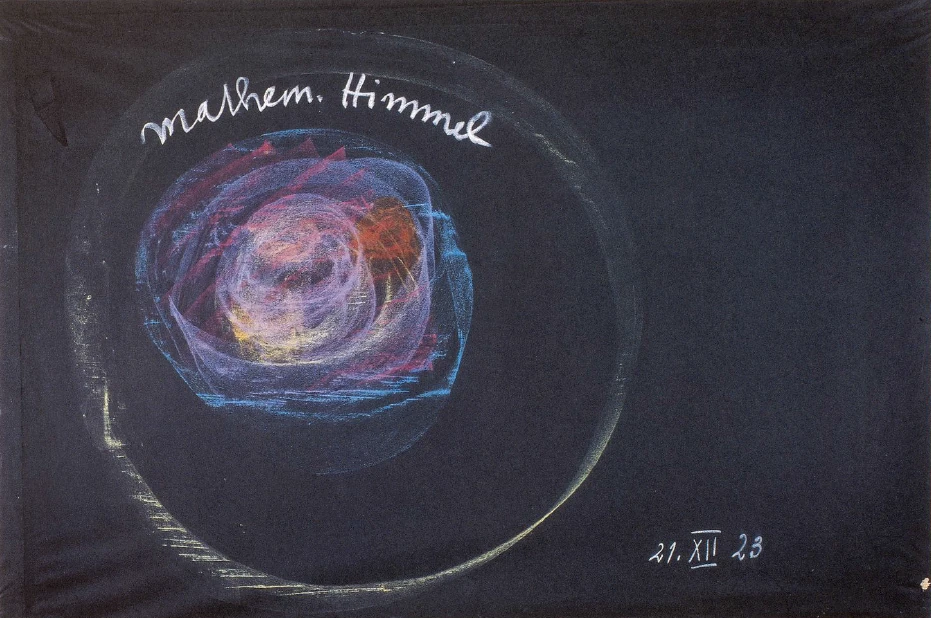
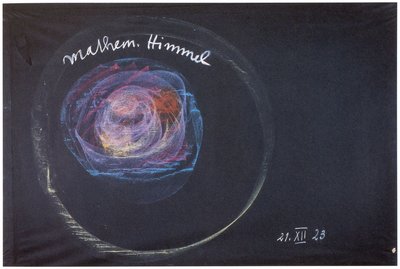
I will tell you. The other metals—let us say, lead, copper, tin, iron—have progressed beyond the globular form. If the whole Earth were still under the influence of the spherical Cosmos all metals would be mercurial. They have progressed beyond the mercurial form. Today they crystallise into other forms. Only the true quicksilver, in the present-day sense of the word, has remained at that stage. What did the ancients and even the mediaeval alchemists say of quicksilver? They said: copper, tin, iron, lead are the good metals which have progressed with Providence. Quicksilver is the Lucifer among the metals, for it has remained at an earlier form. Thus it was in earlier times; when the terrestrial was spoken of in this way, in truth men were really speaking of the celestial.
Thence could men come to speak of that which lies between the periphery and the Earth. Between the periphery and the Earth there lies first, below, the Earth itself, then the watery element, the aeriform, and the fiery.
Thus did the ancients see everything on the Earth in the aspect of the Heavens. And thus did the men of mediaeval times, which came to an end in the first third of the fourteenth century, see everything in the aspect of the surrounding atmosphere. Then, in the fourteenth, and fifteenth centuries came the great change. Man, in his outlook, fell down right on to the Earth. And now to his consciousness the elements of water, air, fire, split up; they split up into sulphur, carbon, hydrogen and so forth. Man sees everything in its terrestrial aspect.
Therewith begin the times which I indicated when describing the fading of the Hibernian Mysteries—the times when man comprehended the Earth with his knowledge, but the Heavens became for him a matter of mathematics. He calculated the size of the stars, their movements, their distance away, and so on. The Heavens became an abstraction to him.
Nor was it only the Heavens which became an abstraction. The reflection of the Heavens in the living human being is his head, and what man can learn of the Heavens is in his head. Since man has learnt to know only the mathematics of the Heavens, that is, the logical and abstract, therefore from this time onwards only the logical and abstract lived in his head—only that which is of the nature of concepts and ideas. Man lost all possibility to receive what is of soul and spirit into his life of concepts and ideas. Then, when the spirit was sought for, there began that great struggle between what man could attain with the idea-content of his head, with his brain-content, and what the Gods desired to reveal to him from the Heavens. This struggle was fought out at its fiercest, and in its grandest aspects, in Rosicrucianism—in the true forms of what are called the Rosicrucian Mysteries in the Middle Ages.1 There the helplessness of modern man was perceived as a preparation for true knowledge. For, even then, in circles of true Rosicrucian Initiation something very powerful made itself felt. And it was this. The pupil became—not abstractly, but inwardly—livingly illumined to perceive: As modern man you can penetrate only to the world of ideas; thereby, however, you lose the very essence of your being as Man.
And the pupil felt that what the new age was giving him could not lead him on to that which was his own true being. He felt: Either you must despair of knowledge or you must go through a kind of death of the pride in abstraction.
The Rosicrucian, the true Rosicrucian pupil, felt as if the master had given him a blow on the cheek, to indicate to him that the abstractions of the modern brain are not suited to penetrate into the spiritual worlds, and that he must make a recantation of the merely abstract, if he would enter those worlds.
That was indeed a great moment of preparation for what we may call the Rosicrucian Initiation.
-
See Rosicrucianism and Modem Initiation. Six lectures given at Dornach, 6th to 13th January, 1924. (Rudolf Steiner Press.) ↩
Blackboard drawings
2 drawings Steiner made on the board during this lecture, as the publisher's edition prints them.